

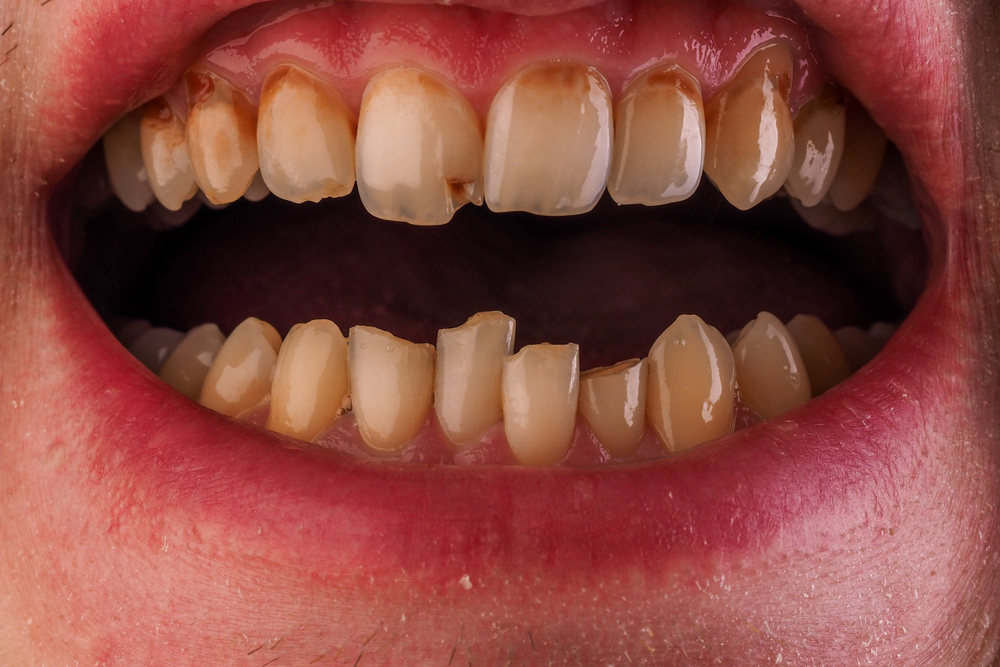
You brush your teeth regularly, yet a dark line appears where the teeth meet the gums. It can be frustrating to notice this change when you are already following a daily oral care routine. However, brushing alone cannot prevent every type of tooth discoloration. The mark may come from mineral deposits, staining, changes in the gumline, or damage to the tooth. Identifying the cause is important because each condition requires a different approach.
1. Mineral Deposits That Brushing Cannot Remove
Plaque is a soft film that forms on teeth throughout the day. When it remains on the surface, minerals in saliva can gradually harden it into tartar. These deposits may develop along the gumline and become brown or nearly black as they collect pigments.
Once tartar forms, a toothbrush cannot remove it effectively. Brushing harder will not solve the problem and may irritate the gums. A dental professional can check whether the dark line is hardened buildup and remove it with appropriate cleaning methods.
2. Dark Stains from Bacteria and Everyday Habits
Not every black line indicates tooth decay. Some people develop a form of external staining linked to pigment-producing bacteria in the mouth. It may appear as small dark marks arranged along the edge of several teeth.
Coffee, tea, tobacco, and certain oral care products can also contribute to discoloration. These marks may remain despite regular brushing because pigments can cling firmly to the tooth surface. A dental examination can help distinguish staining from other problems.
3. Decay Around the Gumline
A dark patch near the gums may sometimes signal a cavity. This area can be difficult to clean, especially when the gum has pulled away from the tooth and exposed its root surface.
Tooth decay does not always cause pain in its early stages. Some people notice sensitivity, while others see only a colour change. Because decay can progress without obvious symptoms, persistent dark marks should not be dismissed as ordinary stains.
4. Receding Gums or Older Dental Restorations
When gum tissue moves away from a tooth, the exposed root may look darker than the enamel. The edge of an existing crown may also become visible as the gumline changes, creating a noticeable dark border.
These changes do not always mean that a tooth is damaged, but they deserve assessment to determine whether treatment is needed.
How Should You Respond to Dark Lines?
Use fluoride toothpaste, brush gently with a soft-bristled toothbrush, and clean between your teeth daily. Avoid scraping dark marks with household tools or applying harsh whitening mixtures. These methods can injure gum tissue or damage tooth surfaces.
Arrange an examination if the line remains or keeps returning. If you develop swelling, persistent pain, pus, or facial swelling, seek prompt dental care. An emergency dentist in Kingsville may be appropriate when symptoms are severe or require urgent attention.
Have Questions About Gumline Discoloration? Contact Kingsville Family Dental!
Changes in tooth colour can be difficult to interpret at home. At Kingsville Family Dental, you can discuss what you have noticed and learn about suitable next steps for your oral health. If a dark line has appeared near your gums or you have concerns about your teeth, contact our team to arrange an assessment.
Book your appointment today!
Recent Comments